

Understanding Brand Authority in the Age of AI Search
I recently dove into a comparison between my March 2025 analysis on "What Works Well in LLMs" and Ahrefs’ May 2025 study of 75,000 brands. To my surprise, both analyses intersected on the importance of one crucial element: brand authority.
What is Brand Authority?
At its core, brand authority is a metric that reflects the cumulative trust, prominence, and perceived expertise that a brand earns across various platforms, both online and offline. This multifaceted concept determines how search engines and AI-driven chatbots rank and surface a brand as an answer to user queries.
Brand authority can be thought of as a type of reputation comprised of several key indicators, including:
- Branded Search Demand: The volume of searches specifically for your brand.
- High-Quality Citations: References to your brand from reputable sources.
- Authoritative Backlinks: Links from credible websites that vouch for your domain.
- Expert and Press Mentions: Coverage by recognized media and industry experts.
- Positive User Engagement: Interaction rates and sentiments from users about your brand.
Distinguishing Brand Authority from Topical Authority
While brand authority encompasses the overall reputation of a brand, topical authority focuses on a brand’s depth of expertise within specific niches. In simpler terms, brand authority is the aggregate of topical authority across various subjects covered by a brand.
Topical authority can trigger ranking benefits for sites extensively covering all aspects of a specific topic, making the distinction between these two concepts crucial.
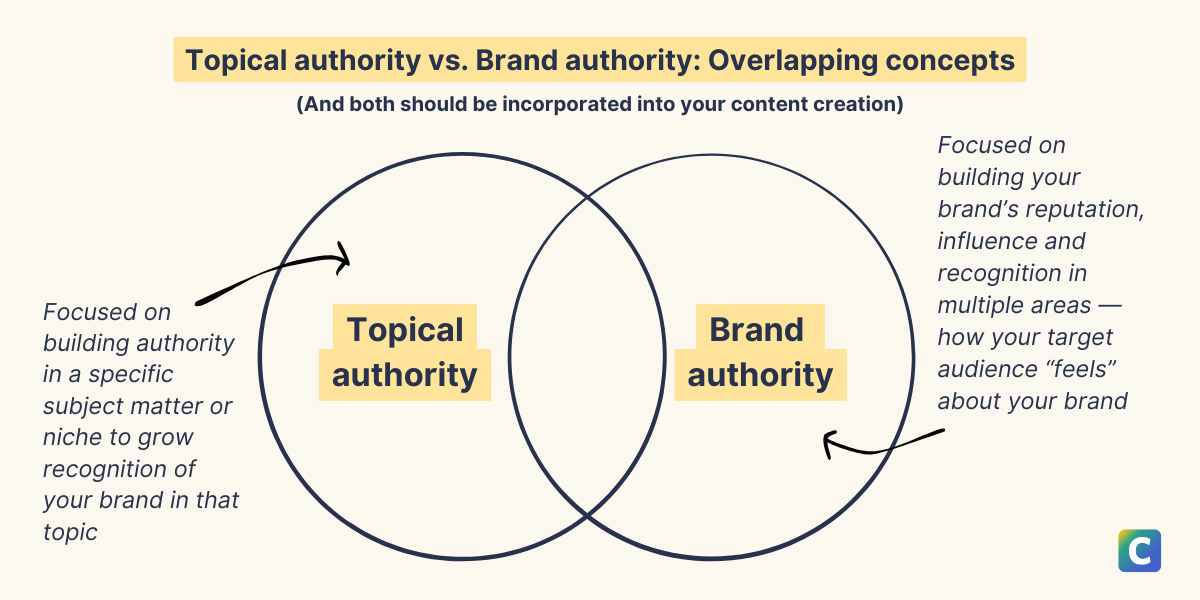
Some topics, like finance or healthcare, may have clear authoritative brands, while others may emerge in entirely new areas without established benchmarks of trust.
The Importance of Brand Search Volume
Both my analysis and Ahrefs’ studies reveal a significant correlation between brand search volume and mentions in AI chatbots. A correlation of around 0.334 suggests that the popularity of a brand strongly influences its visibility in AI-driven responses.
Google’s Quality Rater Guidelines on Brand Reputation
Google’s Quality Rater Guidelines (GQRGs) underline the role of authority in establishing trust. They classify authority into three categories:
- Unique Official Authority: Government websites for official documents.
- Recognized Authority: Trusted sources known for specific topics.
- Informal Authority: Generally accepted opinions or endorsements for non-critical queries.
The guidelines note that trust is a cornerstone factor—if users perceive a source as untrustworthy, the rest of the metrics lose their significance.
Building Brand Authority: Tactical Steps
1. Research Your Reputation
Begin by identifying how your brand is perceived online. Use search operators to unearth comments and mentions across various platforms apart from your associated sites. This will help surface articles or citations that may positively or negatively impact your authority.
2. Utilize Tracking Tools
Platforms like Semrush and Ahrefs can assist in tracking brand mentions, allowing you to grow your presence effectively. Monitor sentiment tied to these mentions to ensure they reflect positively on your brand.
3. Optimize Third-Party Reviews
Analyze user reviews to understand public perception. Reacting to negative reviews can mitigate damage while showcasing effective customer service. Tools may even help scrape various review platforms to gauge sentiments and identify areas for improvement.
4. Examine Your Branded Queries
Ensure that the right pages appear in search results for queries involving your brand. Use Google Search Console to track impressions associated with branded searches to identify gaps in your online presence.
5. Embrace LLM Citation Tracking
Taking advantage of tools designed for LLM citation monitoring can help you stay on top of mentions of your brand across AI search platforms.
6. Conduct Brand Lift & Awareness Surveys
Running periodic surveys can uncover brand recall and expertise perceptions. Tools like Google Surveys or Pollfish can facilitate quick responses.
7. Tap into Social Listening
Social sentiment matters; utilizing listening tools will help you gauge how your brand is talked about on various platforms.
Conclusion: Understanding and Enhancing Brand Authority
Navigating the intricacies of brand authority will be essential in elevating your brand’s presence in AI search environments. By methodically tracking and optimizing each aspect, you can stand out in a crowded marketplace.
Ultimately, if building brand authority isn’t yet on your radar, now is the perfect time to incorporate it into your digital strategy.



